




Stainless Steel Flange Material Selection: A Comprehensive Guide
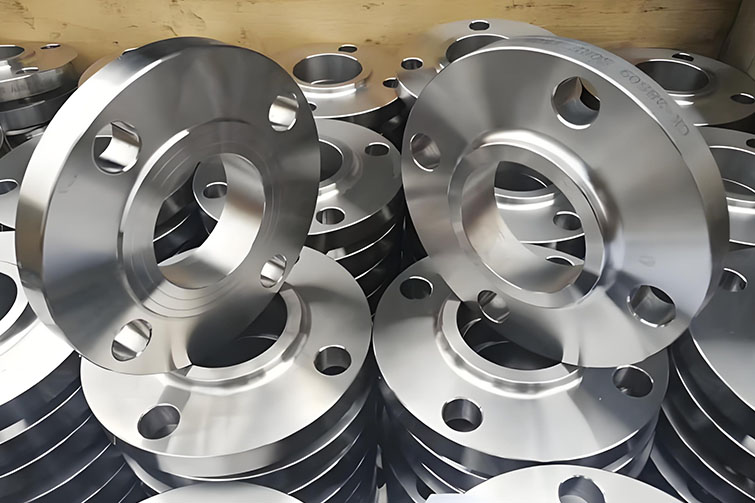
Selecting the appropriate stainless steel material for flanges is a critical decision that impacts the performance, longevity, and cost-effectiveness of piping systems. Stainless steel flanges serve as essential connecting components in industries ranging from chemical processing and food production to oil and gas and pharmaceutical manufacturing. The right material choice ensures reliable operation under specific service conditions while preventing premature failure, corrosion issues, and costly downtime. This comprehensive guide explores the factors influencing stainless steel flange material selection and provides practical guidance for making informed decisions.
Understanding Stainless Steel Classifications
Stainless steels are iron-based alloys containing at least 10.5% chromium, which forms a protective passive layer on the surface, providing corrosion resistance. The addition of other alloying elements such as nickel, molybdenum, and titanium further enhances specific properties. Stainless steels are broadly classified into five families based on their metallurgical structure:
Austenitic Stainless Steels
Austenitic stainless steels are the most widely used family for flange applications, accounting for approximately 70% of all stainless steel production. They contain high levels of chromium (16-26%) and nickel (6-22%), with possible additions of molybdenum, titanium, or nitrogen. These alloys are non-magnetic in the annealed condition and exhibit excellent formability, weldability, and toughness across a wide temperature range.
Common austenitic grades for flanges include:
Type 304/L is the workhorse stainless steel, offering good corrosion resistance in mild environments at an economical cost. The "L" grade (low carbon) contains maximum 0.03% carbon, preventing sensitization during welding and making it suitable for as-welded applications. Type 304/L flanges are commonly used in food processing, dairy, beverage, and general industrial applications where corrosion risks are moderate.
Type 316/L adds 2-3% molybdenum, significantly improving resistance to pitting and crevice corrosion in chloride-containing environments. This grade is essential for marine applications, chemical processing, and pharmaceutical manufacturing where exposure to chlorides or other aggressive media is expected.
Type 317/L contains higher molybdenum (3-4%) and chromium content, providing even greater resistance to aggressive chemicals and reducing environments.
Type 321 and 347 are stabilized grades containing titanium or niobium respectively, preventing chromium carbide precipitation during elevated temperature service. These alloys are specified for applications operating between 800°F and 1500°F (427°C to 816°C).
Ferritic Stainless Steels
Ferritic stainless steels contain chromium (10.5-30%) with little or no nickel, making them magnetic and generally lower in cost than austenitic grades. They offer good resistance to stress corrosion cracking but have limited formability and toughness compared to austenitic alloys.
Common ferritic grades include Type 430 (17% chromium) for mild corrosive environments and Type 444 (18% chromium with molybdenum) for improved pitting resistance in water treatment applications.
Martensitic Stainless Steels
Martensitic stainless steels contain chromium (11.5-18%) and higher carbon content, allowing heat treatment to achieve high strength and hardness. They are magnetic and offer moderate corrosion resistance. Type 410 is the most common martensitic grade, used for valve components and pump shafts rather than flanges in most applications.
Duplex Stainless Steels
Duplex stainless steels feature a mixed microstructure of approximately equal parts austenite and ferrite, combining many advantages of both families. They offer approximately twice the yield strength of austenitic grades with excellent corrosion resistance, particularly to chloride stress corrosion cracking.
Common duplex grades include:
Type 2205 (UNS S32205/S31803) is the most widely used duplex grade, offering excellent strength and corrosion resistance for demanding applications in oil and gas, chemical processing, and marine environments.
Super duplex grades such as UNS S32750 and UNS S32760 provide even higher strength and corrosion resistance for extreme service conditions, including seawater handling and sour gas applications.
Precipitation-Hardening Stainless Steels
Precipitation-hardening stainless steels achieve high strength through heat treatment while maintaining good corrosion resistance. Type 17-4 PH (UNS S17400) is occasionally used for special flange applications requiring exceptional mechanical properties.
Key Factors Influencing Material Selection
Corrosion Resistance Requirements
The primary consideration in stainless steel flange selection is the corrosion resistance needed for the specific service environment. Different corrosion mechanisms require different material characteristics:
General corrosion occurs uniformly across the surface and is addressed by selecting a grade with sufficient chromium and molybdenum content for the specific environment.
Pitting and crevice corrosion are localized attacks often initiated by chlorides. The Pitting Resistance Equivalent Number (PREN) helps compare grades, calculated as PREN = %Cr + 3.3 × %Mo + 16 × %N. Higher PREN values indicate better pitting resistance.
| Grade | PREN Value | Relative Pitting Resistance |
|---|---|---|
| 304/L | 19-20 | Low |
| 316/L | 24-26 | Moderate |
| 317/L | 29-33 | Good |
| 2205 | 34-36 | Very Good |
| Super Duplex | 40-45 | Excellent |
Stress corrosion cracking (SCC) occurs under tensile stress in specific environments, particularly chlorides at elevated temperatures. Austenitic grades are susceptible to chloride SCC, while ferritic and duplex grades offer superior resistance.
Intergranular corrosion can occur in sensitized stainless steels where chromium carbides form at grain boundaries. Low carbon (L grades) or stabilized grades prevent this issue in welded applications.
Galvanic corrosion may occur when dissimilar metals are connected in an electrolyte. Selecting flange material compatible with the piping system and considering isolation methods when necessary prevents this problem.
Temperature Considerations
Service temperature significantly influences material selection:
Cryogenic temperatures (below -100°F/-73°C) require austenitic grades that maintain toughness. Types 304 and 316 are commonly specified for cryogenic service.
Elevated temperatures affect material properties differently. Austenitic grades maintain good strength and oxidation resistance up to approximately 1600°F (870°C). For continuous service above 1000°F (538°C), stabilized grades like 321 or 347 prevent sensitization and loss of corrosion resistance.
Thermal cycling applications benefit from materials with similar coefficients of thermal expansion to connected components, reducing thermal stresses.
Mechanical Property Requirements
The mechanical properties required depend on design pressure, temperature, and external loads:
Yield strength determines the maximum stress the flange can withstand without permanent deformation. Duplex grades offer approximately twice the yield strength of austenitic grades, potentially allowing lighter wall thicknesses.
Tensile strength affects the flange's ability to withstand ultimate loads without failure.
Creep strength becomes important at elevated temperatures where materials slowly deform under sustained stress.
Impact toughness ensures resistance to brittle fracture, particularly important at low temperatures or in dynamic loading applications.
Pressure Class Considerations
Flange pressure classes (150, 300, 600, 900, 1500, 2500) are defined in standards such as ASME B16.5. Higher pressure classes generate greater stresses in the flange, potentially requiring materials with higher strength or larger dimensions. Material selection must consider both the mechanical properties required for the pressure class and the corrosion resistance needed for the service environment.
Fabrication and Welding Requirements
The ease of fabrication affects both initial cost and long-term reliability:
Weldability varies among stainless steel families. Austenitic grades generally offer excellent weldability with proper procedures. Duplex grades require more careful heat input control to maintain phase balance. Ferritic grades may require preheat and post-weld heat treatment.
Machinability affects flange manufacturing costs. Austenitic grades work harden during machining, requiring sharp tools and appropriate speeds. Free-machining grades with sulfur additions are available but may reduce corrosion resistance.
Formability is important if flanges require additional shaping after initial manufacturing.
Code and Standard Compliance
Stainless steel flanges must comply with applicable codes and standards:
ASME B16.5 and ASME B16.47 specify dimensions, tolerances, and pressure-temperature ratings for flanges.
ASTM standards define material requirements:
- A182 covers forged or rolled alloy and stainless steel pipe flanges
- A240 covers stainless steel plate for flanges
- A351 covers cast stainless steel flanges
NACE MR0175/ISO 15156 specifies material requirements for sour service in oil and gas applications.
Material Selection Guide by Application
Food and Beverage Processing
The food industry requires materials that resist corrosion from cleaning agents and food products while maintaining sanitary conditions. Type 304/L is typically sufficient for most applications, with Type 316/L specified where higher corrosion resistance is needed or where chloride-containing sanitizers are used.
Pharmaceutical and Biotechnology
Pharmaceutical applications demand materials with excellent corrosion resistance and cleanability. Type 316/L is the standard choice, with electropolished surfaces often specified for critical applications to minimize bacterial adhesion and facilitate cleaning.
Chemical Processing
Chemical service requires careful matching of material to specific chemicals, concentrations, and temperatures:
- Organic acids: Type 316/L generally performs well
- Sulfuric acid: Higher alloys such as 317/L or duplex grades may be required depending on concentration and temperature
- Hydrochloric acid: Requires highly alloyed materials such as nickel-based alloys
- Nitric acid: Type 304/L often performs well due to the oxidizing nature of the acid
Marine and Offshore
Marine environments expose flanges to chloride-containing seawater and salt spray. Type 316/L is the minimum recommendation, with duplex and super duplex grades increasingly specified for critical applications and higher pressure classes.
Oil and Gas Production
Oil and gas applications often involve corrosive constituents including carbon dioxide, hydrogen sulfide, and chlorides:
- Sweet service (no H2S): Type 316/L or 2205 depending on chloride levels and temperature
- Sour service (H2S present): Materials must meet NACE MR0175 requirements, with 316/L and 2205 commonly qualified
- Subsea applications: Super duplex grades provide the strength and corrosion resistance required for deepwater service
Power Generation
Power plant applications span a range of conditions:
- Water treatment: Type 304/L or 316/L depending on water chemistry
- Steam systems: Carbon steel for most applications, with stainless for instrument lines
- Flue gas desulfurization: Highly alloyed materials such as 317/L or 2205 resist corrosive condensates
Economic Considerations
Initial Material Cost
Material cost varies significantly among stainless steel grades. Type 304/L is generally the most economical austenitic grade, with Type 316/L costing approximately 25-40% more. Duplex grades typically cost between 316/L and nickel-based alloys. Super duplex and specialty grades command premium prices justified by their enhanced performance.
Lifecycle Cost Analysis
Initial material cost represents only part of the total ownership expense. A comprehensive lifecycle cost analysis considers:
- Installation costs including welding and testing
- Maintenance requirements over the service life
- Expected service life before replacement
- Downtime costs associated with failures or replacements
- Risk costs associated with potential failures
In many applications, selecting a higher-grade material with superior corrosion resistance reduces total lifecycle cost despite higher initial expense.
Availability and Lead Times
Common grades such as 304/L and 316/L are readily available from multiple sources worldwide, ensuring competitive pricing and short lead times. Specialty grades may require longer procurement times and may be available from fewer suppliers.
Common Selection Mistakes to Avoid
Over-specification wastes capital by selecting unnecessarily expensive materials for mild service conditions.
Under-specification risks premature failure, safety incidents, and costly downtime.
Ignoring local conditions such as insulation, stagnant areas, or external environments can lead to unexpected corrosion.
Neglecting galvanic effects when connecting dissimilar materials may accelerate corrosion.
Assuming all grades are equivalent ignores significant differences in corrosion resistance, mechanical properties, and fabricability.
Conclusion
Selecting the appropriate stainless steel material for flanges requires careful evaluation of multiple factors including corrosion resistance requirements, service temperature, mechanical property needs, fabrication considerations, code compliance, and economic factors. The wide range of available stainless steel grades provides solutions for virtually any application, from mild service conditions to the most demanding environments.